"One of the true, great natural pieces of property on which I have had the fortunate pleasure to design."
That's Jack Nicklaus, reflecting on the site he chose for Governors Club when the club marked its 20th anniversary. He wasn't exaggerating for the marketing department. The 27-hole course he laid across Edwards Mountain, three distinct nines opened in stages between 1990 and 1994, is the reason most people outside the gates have heard of Governors Club at all.
Ask a resident what's actually on their calendar this week, though, and the answer rarely starts with a tee time.
Membership here is capped. The club allows a maximum of 780 memberships total, with golf memberships limited to 525 of those. That's a structural ceiling, not a marketing line, and it means a meaningful share of what fills the club's calendar every year has nothing to do with a golf swing at all. The clubhouse hosts more than 400 events and activities annually, and layered underneath the golf schedule is a second infrastructure entirely: specialized interest groups that collectively count more than 600 members. Golf built the reputation. The clubs within the club run the actual week.
Two Associations, Not One Golf Course
If you want to understand how a new arrival at Governors Club actually gets folded into the community, start with the Men's Golf Association and the Women's Golf Association, not the course itself.
The MGA's calendar runs on standing structure, not one-off tournaments:
- Weekly Play Days and a running game called the Dog Fight
- A year-long Men's Money List and the Governors Cup
- Club Championships and Inter-Club matches against other clubs
- Couples events pairing golf with dinner, rotating between 9 and 18 holes
- FIVE after 6, a program built around five holes, cocktails on the range, and dinner after
The WGA runs its own parallel track, with more than 200 members playing Tuesday mornings in 18-hole, 9-hole, or 3-hole formats, plus a Get-In-the-Swing program built specifically for women picking up golf for the first time.
None of this is incidental programming. It's the reason someone who moves in during golf season can be teeing off alongside 200 peers by their first Tuesday rather than waiting for a single annual social to introduce them around.
The Family Layer Underneath the Golf Reputation
Governors Club still carries a reputation, fair or not, as a retirement-heavy golf enclave. The programming tells a more complicated story. The club runs a Junior Golf Academy for members ages 3 to 18, Kids Eat Free Wednesdays, monthly Date Nights with childcare provided, Family Nights, and parent-child golf and tennis tournaments alongside year-round holiday celebrations.
That shift wasn't accidental. A community feature in Chatham Magazine documented the club hiring a full-time youth activity director specifically to build out family programming, timed to a wave of younger families moving into the broader Chatham County area through communities like Briar Chapel and the growing town of Pittsboro. Grandparents who'd bought into Governors Club a decade earlier suddenly had grandchildren showing up on weekends, and the club's calendar adjusted to hold both generations at once.
The course drew the golfers. The family programming is what's kept the community from aging into a single demographic.
The Clubs With Nothing to Do With a Scorecard
Strip golf out entirely and Governors Club still runs a full calendar.
The club's Arts Society arranges programs that bring performances and exhibits directly to members, along with members-only previews and preferred seating for arts events happening elsewhere in the Triangle. The wine program is ranked in the Top 14 in the country and has earned the CMAA Wine Award of Distinction, with regular wine dinners, tastings, and organized trips to wine-producing regions. Jazz by the Lake has shown up in write-ups of the community for years running, an outdoor evening tradition built around the clubhouse's lake view rather than its fairways.
Tennis operates on its own separate track: six Har-Tru clay HydroCourts and two hard courts, more than 100 active players, USTA league and interclub team options, and a teaching staff that includes a past North Carolina USPTA Pro of the Year. Annual club championships run across men's, women's, doubles, and mixed doubles brackets.
Every one of these requires exactly zero golf handicap to join. What they require is showing up to a calendar that was built, deliberately, to have more entry points than one sport can offer.
Why the Calendar Carries More Weight Here Than in an Open Neighborhood
There's a reason this layered calendar matters more at Governors Club than it would in a typical open subdivision, and it comes down to how the neighborhood is physically built.
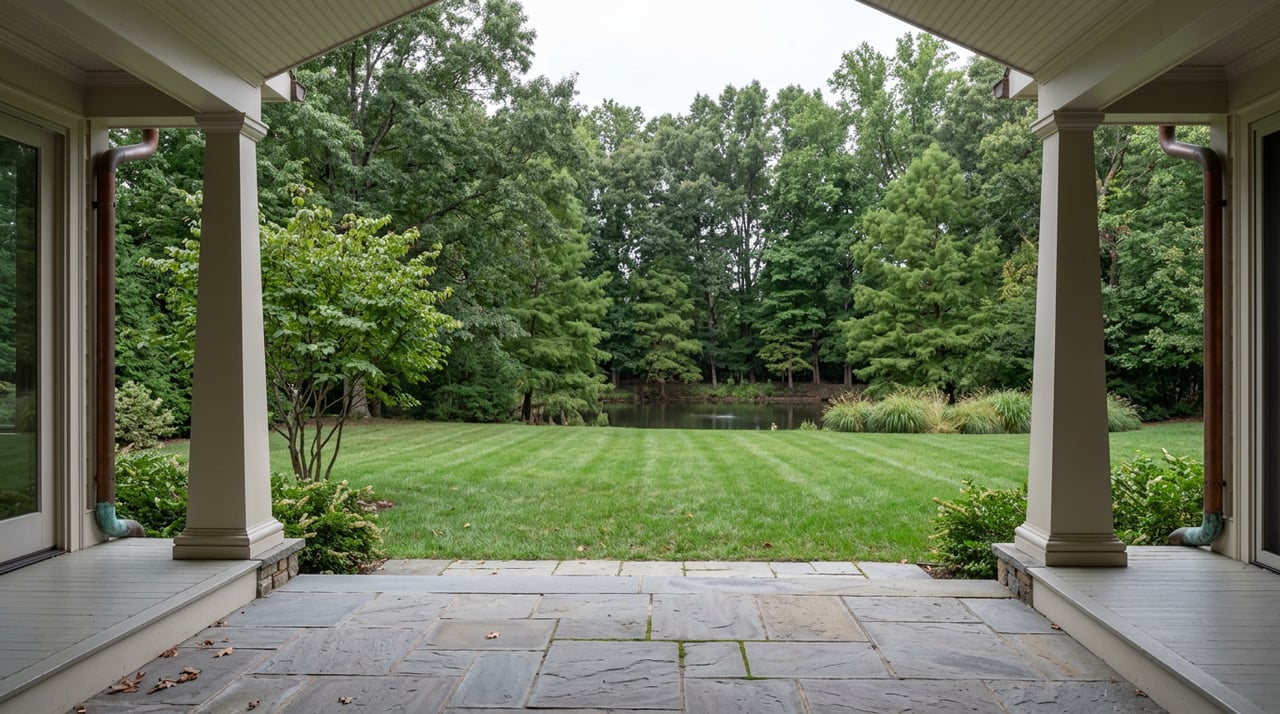
Governors Club runs a single main entrance with a staffed gatehouse around the clock. Inside, walking and biking trails wind through the community's wooded hills, but they connect residents to each other, not to a public street grid running past a neighboring subdivision. In a typical open neighborhood, you meet people by accident: a dog walk, a stranger's yard sale, a kid's bike ride down a connecting street. Behind a single controlled gate, that kind of incidental contact mostly doesn't happen by design.
The clubhouse and its associations end up doing the job that sidewalks and through-streets handle elsewhere. That's not a coincidence, and it's the real explanation for why a member-owned club with 780 capped memberships bothers running 400-plus events a year instead of a handful of marquee ones. The calendar isn't extra. It's the connective tissue an open neighborhood gets for free and a gated one has to build on purpose.
Where the Calendar Actually Lives
None of this shows up on a single master flyer. Most of what fills a member's week is a standing weekly slot in an association, not a one-off ticketed event advertised at the entrance.
New members and longtime residents looking to find their footing tend to start in the same few places:
- The golf shop for MGA and WGA sign-up sheets and weekly play day pairings
- The tennis pro shop for USTA league registration and club championship brackets
- The clubhouse front desk for the wine program calendar and Arts Society previews
- The Wellness Center desk for group fitness schedules and the Junior Golf Academy calendar
Jack Nicklaus built the topography that put Governors Club on the map. What actually fills a resident's Tuesday morning, or a Wednesday night when the kids eat free, or a Friday evening by the lake with a jazz trio playing, runs through a much longer list of names most people outside the gates have never heard: the Dog Fight, the Governors Cup, Get-In-the-Swing, FIVE after 6, Jazz by the Lake. The course made the community famous. The clubs within the club are what actually make it a community.
If you're curious about life inside Governors Club beyond the course, our Governors Club neighborhood guide covers the setting, the homes, and what's nearby in more detail. And if you're a current resident or thinking about what's next for your home here, Spotlight Realty knows this community from the inside. Contact Us anytime to talk through what you're seeing on the ground.