Durham School Rankings Are Lying to You: What Homebuyers Need to Know
If you’re shopping for a home in Durham, there’s a good chance you’ve looked at the school ratings on Zillow, Redfin, or another real estate website.
You see a number next to the school assigned to the house. Maybe it’s a 9/10, an 8/10, or something considerably lower. It’s tempting to treat that number as a simple answer to a very important question:
Is this a good school?
But in Durham, that number doesn’t tell the whole story.
In fact, it can leave out a significant part of the picture — because Durham families have considerably more public school options than the school assigned to their home address.
I’m Bill Stevenson with Spotlight Realty. I’ve lived in Durham for more than 30 years and have been selling real estate in the Triangle for more than 16 years. I’m not here to tell you which schools are good or bad. Instead, I want to explain how those school ratings are generated, what they actually tell you, and what you should be looking at when you’re buying a home in Durham.
The Same School Can Have Four Different Rankings
Let’s start with something that should immediately make you question the idea of a single school ranking.
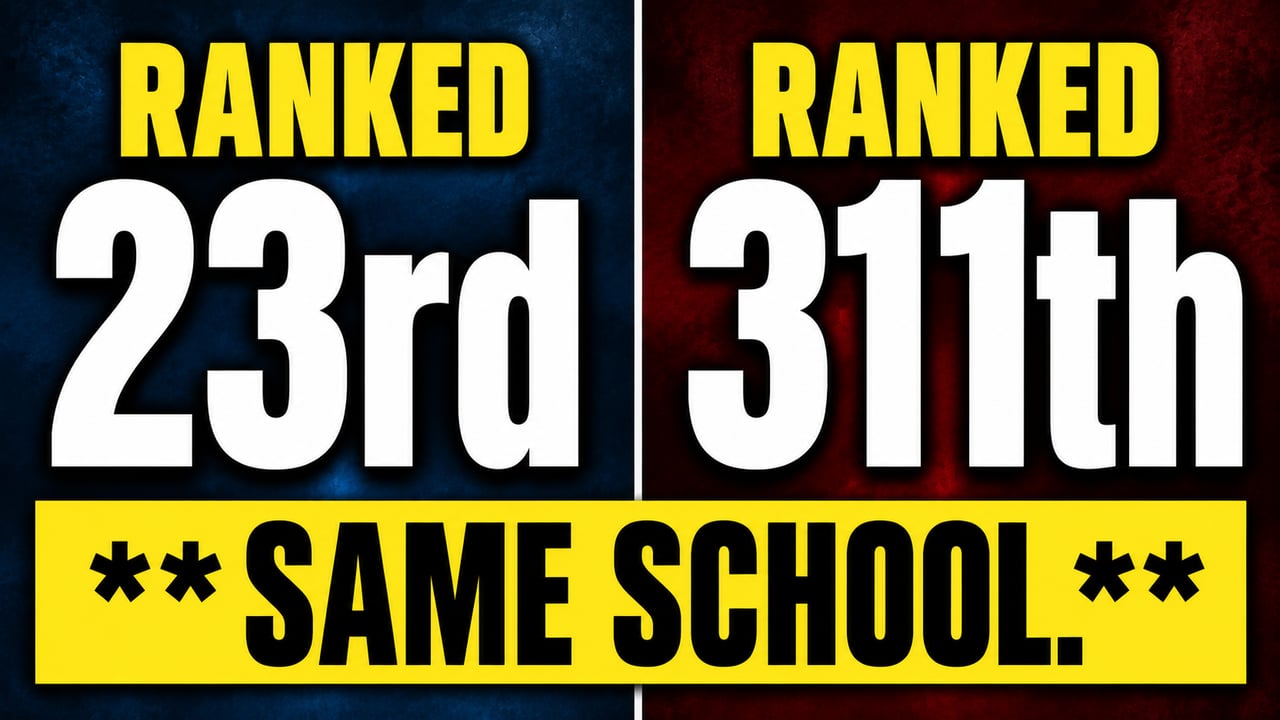
Take Durham School of the Arts.
It’s a magnet school in downtown Durham that has been around for years and is generally well regarded. But ask different school-ranking websites how good it is, and you can get dramatically different answers.
US News, Carolina School Hub, SchoolDigger, and Public School Review have all ranked the school differently.
Why?
Because they aren't necessarily measuring the same thing.
One ranking may place more emphasis on test scores. Another may consider student growth. Another may emphasize college readiness or graduation rates.
Change the formula and you change the ranking.
That's important to remember when you see a school rating presented as a single number. The number looks objective because numbers feel objective. But behind that number is a methodology — a particular recipe for deciding what "good" means.
What Zillow's School Rating Actually Tells You
Zillow pulls its school information from GreatSchools, which has developed a methodology that considers factors including student progress, growth, and college readiness. GreatSchools also updated its rating methodology in 2026.
The problem isn't necessarily that the underlying data is bad.
The problem is what happens when all of that information gets reduced to a single number on a home listing.
You’re scrolling through houses, looking at kitchens, square footage and photos — and then you see a school rating next to the address.
It feels like a definitive answer.
But it isn't.
And there’s an even bigger issue when you're looking at homes in Durham.
Durham's School Options Don't Fit on a Home Listing
A typical home listing shows you the schools assigned to that address.
That makes sense — and the assigned school is absolutely important information.
But Durham isn't a school system where your assigned neighborhood school is necessarily your only public-school option.
Durham offers magnet schools, charter schools, year-round options, early college programs, middle college programs and other specialized opportunities.
For example, Hillside High School has the district's International Baccalaureate program.
Durham School of the Arts is a magnet school.
There are early college and other specialty programs that don't depend simply on where you live.
Those options don't appear on the school section of a Zillow listing.
That means the school rating attached to a house can show you only part of the educational landscape available to your family.
Your School Zone Is the Floor, Not the Ceiling
This is perhaps the most important thing for Durham homebuyers to understand:
Your assigned school is not necessarily the limit of your options.
If you’re considering a house in Durham, don't just ask:
"What school is this house zoned for?"
Also ask:
"What other options are available to my child?"
That distinction can dramatically change how you evaluate a property.
A house with a lower-rated assigned school might still be worth considering if your family is interested in magnet, charter, early college or other programs.
That doesn't mean you should ignore the assigned school. It means you shouldn't stop your research there.
Why School Ratings Can Be Complicated
There's another issue that's worth understanding.
School ratings are heavily influenced by student performance data. And student performance is influenced by many factors beyond the quality of the teachers and administrators inside a school.
Durham's school-choice system means that some families actively seek alternatives to their assigned neighborhood schools.
Families who are particularly engaged with the school system may apply for magnets, charters or specialized programs.
When some students leave a traditional neighborhood school, the composition of the student body changes.
That can affect test scores.
Lower test scores can affect rankings.
Lower rankings can influence the next family looking at a house in that school zone.
And that family may then decide to pursue an alternative school, continuing the cycle.
That's not a simple cause-and-effect equation, and it doesn't mean that a lower-rated school has bad teachers or isn't providing a quality education.
But it does illustrate why a school rating shouldn't be treated as a pure measurement of teaching quality.
The number is telling you something about student outcomes. It isn't necessarily telling you everything about what happens inside the classroom.
Look at Growth, Not Just Proficiency
If you're researching schools, one of the most useful things to investigate is student growth.
Proficiency tells you how students are performing at a particular point in time.
Growth tells you how much students are progressing.
Those are two different questions.
A school with lower overall proficiency may still be doing a good job helping its students make significant academic progress.
Conversely, a school with very high proficiency numbers may be serving a student population that entered the school already performing at a high level.
That doesn't make one school good and the other bad. It means the numbers are answering different questions.
When evaluating schools, look beyond the headline rating.
Five Things Durham Homebuyers Should Do
If schools are an important factor in your home search, here are five things I'd recommend.
1. Don't Take the Listing Rating at Face Value
Use the rating as a starting point, not the final answer.
Go directly to the school district and other reliable sources for current information.
2. Look at Growth
Don't focus exclusively on proficiency. Look at how students are progressing.
3. Research Your Options
Find out what magnet, charter, year-round, early college and specialized programs may be available to your family.
Your address determines your assigned school. It doesn't necessarily determine your only option.
4. Verify the Assignment Before You Make an Offer
School boundaries can change.
If the school assignment is a major reason you're buying a particular house, verify the assignment for the specific address when you're ready to write an offer.
Not when you first start browsing.
Not based solely on an old listing.
Verify it when it actually matters.
5. Talk to Someone Who Understands the System
School choice in Durham can be complicated.
If you need help understanding the options, Bill recommends Sarah Kiger at Triangle School Consulting. He has no financial relationship with her; he simply recommends her because school consulting is what she does every day.
So, Are Durham School Rankings Wrong?
Not necessarily.
The rankings aren't necessarily "lying" about the schools.
They're just answering a much narrower question than many homebuyers realize.
A Zillow listing tells you the school assigned to the property and gives you a rating based on a particular methodology.
It doesn't tell you every school your child might be able to attend.
And in Durham, that's a pretty significant distinction.
The most important takeaway for homebuyers is simple:
Don't make a decision about a Durham home based solely on the school rating attached to the listing.
Understand the assigned school. Understand the rating methodology. Look at student growth. And most importantly, understand the broader school-choice options available to your family.
Your school zone is the starting point — not necessarily the whole story.
Thinking About Moving to Durham?
Schools are just one piece of the home-buying puzzle. Neighborhood, commute, housing costs, taxes, resale value and lifestyle all matter, too.
If you're considering a move to Durham or anywhere else in the Triangle, our team at Spotlight Realty can help you understand what the numbers and the listings don't always show you.
And if you're trying to figure out the Durham school system specifically, don't rely on one number next to a house photo.
Do the deeper research.
It could change the way you look at your entire home search.