The Best and Worst Things About Downtown Durham
Downtown Durham is one of those places that's easy to fall in love with — and easy to complain about, sometimes in the very same afternoon.
With historic tobacco warehouses, an impressive restaurant scene, major entertainment venues, and a genuinely walkable core, downtown has a personality all its own. But it's also compact, groceries aren't exactly around every corner, and big events can make parking and traffic a headache.
Bill Stevenson of Spotlight Realty has lived in Durham for about 32 years. While he lives in South Durham rather than downtown, he visits several times a week and has worked with plenty of people who call downtown home.
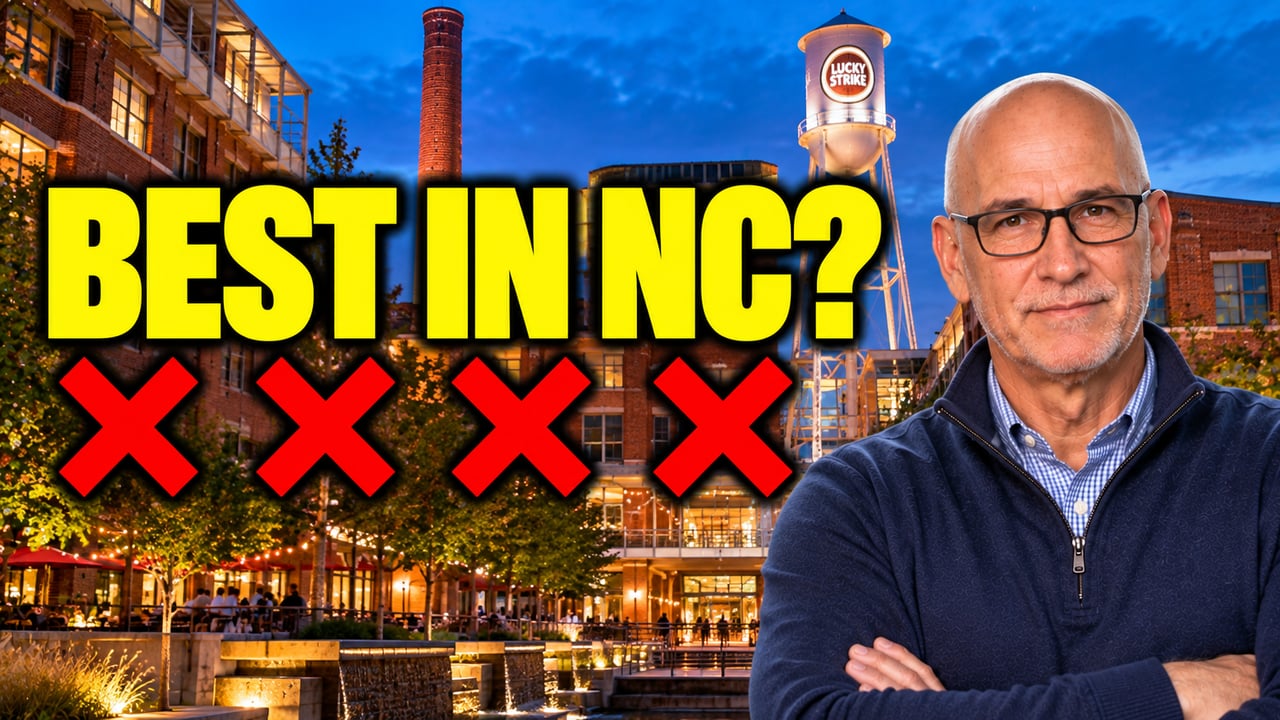
His take? Downtown Durham is the best downtown in North Carolina. It will also irritate you at least four separate times — possibly before lunch.
Here are eight things to love about downtown Durham, along with the drawbacks worth knowing before you move.
1. Walkability: Park Once and Enjoy Your Evening
The best: You can leave your car in one place.
One of downtown Durham's biggest advantages is how much you can do on foot once you arrive. Park your car, walk to dinner, catch a show, and find somewhere to go afterward without having to move your vehicle.
In a country where so many downtowns and commercial districts are built around driving between destinations, that simplicity is a real perk.
The worst: Downtown is small.
Downtown Durham is compact — roughly 11 blocks of former tobacco warehouses and surrounding destinations, as Bill describes it. If you're coming from Chicago, Brooklyn, or even Charlotte, you may find the downtown footprint smaller than expected.
The upside is that you can get around easily. The downside is that you may feel like you've seen most of it after a few weeks.
The takeaway: If you want a walkable downtown with a distinct local identity, Durham delivers. If you're expecting a sprawling urban center with endless new districts to explore, adjust your expectations.
2. Food: Excellent Restaurants, Short Memories
The best: A surprisingly strong independent restaurant scene.
Downtown Durham packs a lot of good food into a small area. Bill points to its Michelin recognition, James Beard semifinalists, and the number of independent restaurants that make the area feel personal.
Some of the best experiences aren't about awards at all. They're about small dining rooms, independent owners, and restaurants where you can have an excellent meal on a Tuesday night without dressing up for the occasion.
The worst: Your favorite restaurant might disappear.
Restaurants open and close regularly. High rents, thin margins, and the challenges of running a small business mean that even a beloved neighborhood spot may not be around forever.
Bill's advice is practical: go early, go often, and don't get too attached to having a usual. The restaurant you keep meaning to try might not be there next year.
The takeaway: Downtown is a great place for people who love discovering independent restaurants — and who can handle a little heartbreak when a favorite closes.
3. Parking: Often Free, Occasionally Frustrating
The best: Parking can cost you nothing.
According to Bill's overview, city-owned garages are generally free after 7 p.m. and on weekends. On-street parking is also free during those periods, and American Tobacco offers two hours of free parking.
That makes it possible to park once, grab dinner, attend a show, or spend a Saturday afternoon downtown without automatically adding parking fees to the budget.
The worst: Events change the equation.
When people talk about downtown Durham parking, they often remember the one time they circled a garage for 20 minutes — not all the evenings when parking was easy.
Special events are a real exception. DPAC shows, Durham Bulls home games, and other major events can bring event pricing, fuller garages, and more traffic.
The takeaway: Check the event calendar before you go. On busy nights, arrive early or consider parking a little farther away and walking the extra couple of minutes. Parking rules and rates can change, so confirm current details before your visit.
4. The Buildings: Real History, Debatable New Construction
The best: Historic tobacco warehouses give Durham its character.
American Tobacco, Brightleaf, and Golden Belt are reminders of Durham's industrial past. Their brick walls and original architecture create a sense of place that new construction can't simply reproduce.
Bill particularly loves American Tobacco at dusk, when the campus and water features make the old buildings feel especially beautiful.
These spaces are a big part of what makes downtown Durham recognizable and different from other places in the Triangle.
The worst: Not every new building fits the surroundings.
Downtown needs housing, and new development is part of its evolution. But Bill is less enthusiastic about some of the newer towers going up alongside the historic buildings.
His concern is that the area's original architecture is a major reason people love downtown in the first place. New development has an opportunity to complement that character — rather than compete with it.
Of course, architecture is subjective. Some buyers love modern towers and the amenities that come with them.
The takeaway: If historic buildings and authentic architectural character are high on your list, downtown Durham has plenty to appreciate. If you're considering a newer condo, decide for yourself how well the building fits your taste and lifestyle.
5. The Venues: Broadway Shows and Baseball Close to Home
The best: DPAC and the Durham Bulls Athletic Park.
Two major venues help downtown Durham punch above its weight.
The Durham Performing Arts Center (DPAC) brings touring Broadway productions and other major performances to the area. The Durham Bulls Athletic Park offers minor league baseball in a setting that can make a warm evening feel like the perfect night out.
For residents, the combination is especially appealing: dinner, a show or a ballgame, and a walk back to the car — all without driving between destinations.
The worst: When both venues are busy, downtown gets crowded.
On a night when DPAC has a show and the Bulls have a home game, traffic and parking can become much more complicated. Restaurants may be packed, garages may charge event rates, and a normally quiet evening out can require more planning.
If you live downtown, checking the event calendar can become part of your routine.
The takeaway: The venues are a major lifestyle benefit, but expect downtown to feel very different on big event nights.
6. What's Being Built: Progress Comes With Construction
The best: Downtown is getting more connected.
Bill highlights two major projects in his overview: the Durham Rail Trail, planned as a nearly two-mile multi-use trail along an old rail bed, and the planned conversion of Roxboro and Mangum Streets from one-way roads to two-way streets.
The goal is to make downtown more accessible and comfortable for people moving through it, especially pedestrians. For residents who want a more walkable urban environment, these improvements could be meaningful.
The worst: Construction takes time.
The projects described in the video have timelines that extend into 2028, with work on Roxboro and Mangum targeted to begin in 2027.
That means people moving downtown during this period may experience construction noise, detours, orange cones, and temporary inconveniences before seeing the finished result.
Project schedules can change, so check current city updates if construction timing will affect your decision about where to live.
The takeaway: Downtown's future looks promising, but don't confuse a neighborhood's plans for improvement with a project that's already complete.
7. Downtown's Confidence: Durham Is Doing Its Own Thing
The best: Downtown has its own identity.
Durham doesn't need to be Raleigh or Chapel Hill. Its downtown has developed a distinct personality rooted in its history, independent businesses, food scene, and evolving urban character.
For people who appreciate places that feel authentic rather than carefully manufactured, that confidence is part of the appeal.
The worst: The reputation hasn't caught up for everyone.
Bill says some people still have strong opinions about downtown Durham without having spent much time there themselves. For people relocating from out of town, that can mean answering questions or concerns from family members who have an outdated impression of the area.
Safety deserves its own thoughtful conversation. Bill references a separate video that examines crime statistics, rather than trying to settle that question through general impressions alone.
The takeaway: Visit downtown yourself, explore at the times you expect to be there, and evaluate specific blocks and buildings rather than relying entirely on someone else's reputation of the city.
8. Car-Light Living: A Real Possibility, With One Catch
The best: You may not need to drive everywhere.
Downtown Durham is one of the few places in the Triangle where residents can realistically build a lifestyle around walking.
Depending on where you live and work, you may be able to walk to restaurants, entertainment, the ballpark, and even your workplace. Some households can manage with one car instead of two — a meaningful advantage in a region where driving is often essential.
The worst: Groceries are less convenient.
You can find excellent restaurants and coffee downtown, but a full-size grocery store isn't necessarily around the corner.
Downtown has a small urban market, and a nearby co-op provides another option. However, residents looking for the selection of a full-size supermarket may need to drive a couple of miles, including to stores near Duke's East Campus along Ninth Street.
The takeaway: Downtown can make everyday life much less car-dependent, but it may not eliminate your need for a car. Think about grocery shopping and other weekly errands, not just how easy it is to walk to dinner.
Is Downtown Durham the Right Place for You?
Downtown Durham is a strong fit for people who value walkability, independent restaurants, historic architecture, live entertainment, and a neighborhood with its own personality.
It may be less appealing if you want a large downtown, easy access to a full-size grocery store on foot, a yard, or a quieter setting away from events and construction.
If you love the idea of downtown life but want more space, South Durham and other nearby neighborhoods may be worth considering. The right choice depends on whether you value being in the middle of the action or prefer a little more room and a different daily routine.
The Bottom Line
Downtown Durham has a lot going for it: excellent food, historic buildings, major entertainment venues, and a level of walkability that's hard to find elsewhere in the Triangle. It also has real limitations, from its compact size and grocery-store access to event-night parking and ongoing construction.
Those trade-offs don't make downtown a bad place to live. They make it a place you should understand before committing.
If you're relocating to the Triangle and trying to decide whether downtown Durham fits your lifestyle — or whether you'd be happier a few minutes away with a yard and easier grocery runs — Bill Stevenson with Spotlight Realty can help you think through the options.
And if safety is one of your main concerns, look for Bill's separate video on downtown Durham's crime numbers for a more data-focused discussion.