Living in the Triangle: Raleigh vs. Durham vs. Chapel Hill
So you’re thinking about moving to North Carolina—and somehow, you keep seeing “the Triangle” pop up everywhere. It sounds a little mysterious at first, maybe even like something you should be cautious about. But in reality, the Triangle is one of the most livable and fast-growing regions in the country.
The name comes from three cities—Raleigh, Durham, and Chapel Hill—that form a triangle on the map. In the center sits Research Triangle Park (RTP), a major hub for tech, biotech, and pharmaceutical companies. Together, the region is home to about two million people, though it rarely feels that large thanks to how spread out everything is.
One of the biggest things to understand about the Triangle is this: it’s not one city. Each of the three has a completely different personality. Choosing where to live isn’t about finding the “best” city—it’s about finding the one that fits your lifestyle.
What Living in the Triangle Is Really Like
Before diving into each city, it helps to understand the overall rhythm of the area.
Getting around is relatively easy by most big-city standards. Raleigh, Durham, and Chapel Hill are all within about 20 to 35 minutes of each other, and it’s very common for people to live in one city and work in another. Commutes are manageable, especially compared to larger metro areas.
The weather is another defining feature. Summers are hot and humid—there’s no way around it. Fall is long and genuinely beautiful. Winters are mild but occasionally chaotic when snow is forecast. And spring? Spring is lovely, except for a few weeks when everything turns yellow from pollen.
With that baseline in mind, here’s how the three cities compare.
Raleigh: Order, Structure, and Easy Living
Raleigh, the state capital, feels exactly like you might expect: clean, organized, and thoughtfully planned. It leans suburban, even within city limits, and is especially popular with families and professionals looking for stability.
Daily life in Raleigh tends to revolve around neighborhoods, shopping centers, and well-developed communities. There’s a strong emphasis on convenience—ample parking, newer construction, and predictable layouts.
Housing here skews toward newer and higher-end. True starter homes are harder to find, and many neighborhoods are part of master-planned communities with homeowners associations.
Raleigh works best for people who value:
-
Good schools
-
A structured, predictable environment
-
A family-friendly atmosphere
The trade-off is that it’s spread out. You’ll likely spend more time driving, especially if you need to cross town.
Durham: Character, Creativity, and Incredible Food
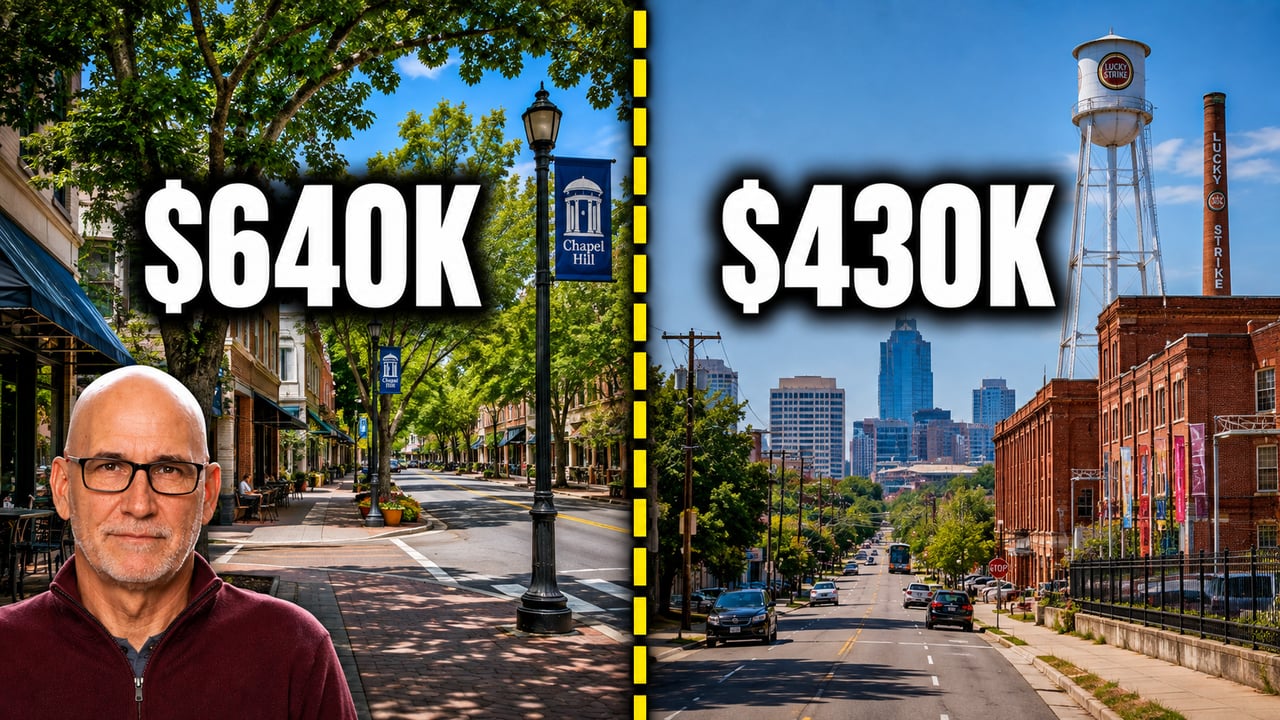
Durham offers a completely different experience. It’s a city with history, personality, and a creative edge. Once a tobacco town, it has transformed into a hub for healthcare, education, and innovation—while still holding onto its industrial roots.
Downtown Durham is compact, walkable, and full of life. Old warehouses have been repurposed into apartments, restaurants, and offices. There’s live music, a strong arts scene, and a sense that the city is constantly evolving.
The food scene is one of Durham’s standout features. New restaurants open frequently, and many of them are genuinely exceptional.
Housing in Durham is diverse. You’ll find everything from historic homes to modern townhouses, often at more accessible price points than the other two cities. However, neighborhoods can change quickly from one block to the next, so it’s important to do your research.
Durham is a great fit if you’re looking for:
-
A more urban, walkable feel
-
Cultural depth and creativity
-
A strong dining and entertainment scene
It’s less predictable than Raleigh—and that’s exactly why many people love it.
Chapel Hill: Quiet, Intellectual, and Deeply Rooted
Chapel Hill revolves around its university, and that influence shapes nearly every aspect of the town. The result is a place that feels thoughtful, scenic, and a bit slower-paced.
The town is smaller and more contained than Raleigh or Durham, with tree-lined streets and a strong sense of community. It’s the kind of place where traditions matter and change happens more gradually.
Housing here is the most expensive in the Triangle. Demand is driven in part by the area’s highly regarded public schools and its overall quality of life.
Chapel Hill appeals most to people who prioritize:
-
Top-tier schools
-
A quieter, more relaxed pace
-
A strong sense of place and community
The trade-offs are cost and a smaller local job market, though proximity to RTP and nearby cities helps offset that.
Jobs, Commuting, and Flexibility
One of the biggest advantages of living in the Triangle is flexibility. Because the cities are so close together, you’re not locked into living where you work.
It’s completely normal to:
-
Live in Durham and work in RTP
-
Live in Cary and work in Raleigh
-
Live in Chapel Hill and commute elsewhere
Most commutes fall within 20 to 35 minutes, making it easy to prioritize lifestyle over proximity to work.
So, Where Should You Live?
There’s no single “right” answer—it all comes down to what matters most to you.
-
Choose Raleigh if you want structure, convenience, and a suburban feel
-
Choose Durham if you want culture, character, and a more urban lifestyle
-
Choose Chapel Hill if you want excellent schools, natural beauty, and a quieter pace
The Triangle works because it offers all three—and lets you move between them with ease.
In the end, the best choice is the one that makes you feel at home. And once you find that, you’ll understand why so many people end up staying.